
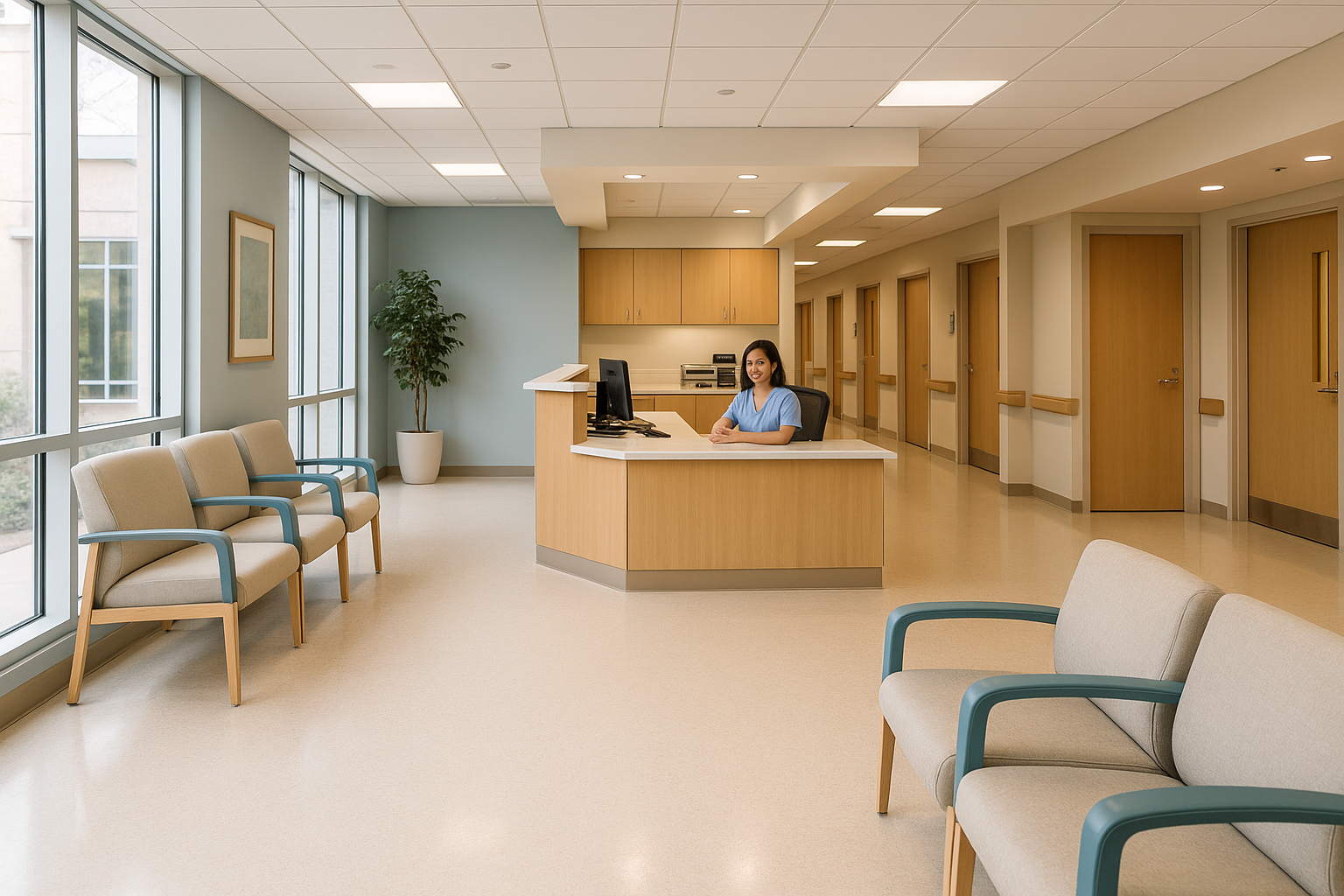
What factors are considered when designing for healthcare spaces?
Healthcare spaces aren’t like your typical office or home reno. Trust me on this one. After years of watching projects go sideways because someone forgot about infection control or didn’t think about how a confused patient might navigate the space… well, let’s just say I’ve learned a thing or two.
## **The Big Picture Stuff That Really Matters**
First off – and I can’t stress this enough – healthcare design is about **people at their most vulnerable**. Whether it’s a Gold Coast medical clinic or a specialist suite, every decision impacts someone’s healing journey.
The basics? Sure, we need to tick all the regulatory boxes. But here’s what actually makes a difference:
– **Patient flow that makes sense** (nobody wants to wander around looking for the bathroom when they’re feeling crook)
– **Natural light wherever possible** – it’s free medicine, honestly
– **Surfaces that can take a beating** from constant cleaning
– **Quiet spaces** because healing happens better without chaos
## **The Nitty Gritty Details**
Okay so here’s where it gets interesting. You know those mood boards and 3D models we create for residential projects? Same process, totally different priorities.
**Infection control** drives everything. And I mean everything. That gorgeous textured wall finish might look amazing in someone’s living room but in a healthcare setting? Nightmare to clean. We’re talking:
– Seamless flooring that goes up the wall
– Non-porous surfaces everywhere
– Minimal joints and crevices (bacteria love those little hiding spots)
– Materials that can handle hospital-grade disinfectants
## **Making It Feel Less… Medical**
Here’s the challenge though – nobody wants to feel like they’re in a sterile box. The trick is balancing clinical requirements with **actual human comfort**.
I’ve seen waiting rooms that feel more like day spas. Treatment rooms with artwork that actually distracts from procedures. Even chemotherapy suites designed to feel hopeful rather than… well, you know.
Some go-to strategies:
– **Warm color palettes** (within reason – we’re not painting OR walls sunset orange)
– **Varied seating options** because not everyone sits the same when they’re in pain
– **Clear wayfinding** that doesn’t feel institutional
– **Privacy without isolation**
## **The Stuff Nobody Thinks About Until It’s Too Late**
**Acoustics**. Seriously. Nothing worse than hearing someone else’s medical consultation through the wall. We plan for:
– Sound-absorbing materials
– Strategic room placement
– White noise systems when needed
And then there’s **accessibility**. Not just wheelchair ramps (though yes, those too). I’m talking about:
– Grab bars that don’t scream “grab bar”
– Counter heights for all users
– Door handles that work with arthritis
– Lighting that helps aging eyes without creating glare
## **The Technical Side**
Look, I’d love to skip this part but it matters. Healthcare spaces need:
– **Specialized HVAC** for infection control
– **Medical gas outlets** in the right spots
– **Power everywhere** (so many machines!)
– **IT infrastructure** for digital health records
– **Emergency systems** that actually work when needed
## **Making It All Work Together**
The best healthcare designs? They’re invisible. Patients don’t notice the antimicrobial door handles or the way the flooring prevents slips. They just feel… safe. Cared for. Like someone actually thought about their experience.
That’s where having a solid design process helps. Those detailed plans and elevations we create? They’re not just pretty pictures. They’re making sure the nurse station has sight lines to patient rooms. That the pharmacy has proper security. That families have somewhere comfortable to wait.
## **The Bottom Line**
Designing healthcare spaces is equal parts art, science, and empathy. It’s understanding that the person in that space might be scared, in pain, or getting life-changing news.
Every material choice, every layout decision, every finish selection… it all adds up to either support healing or get in its way.
And honestly? When you get it right – when you see patients actually relax in a space you’ve designed, or staff tell you how much easier their job is now – that’s when you know why this specialized design work matters.
Because at the end of the day, we’re not just creating healthcare spaces. We’re creating places where healing can actually happen.
*Got questions about your healthcare project? Whether it’s a small clinic renovation or a complete medical facility design, the team at Interiors by Design knows how to balance all these factors while keeping your budget in check. After all, good healthcare design shouldn’t require surgery on your bank account.*